The future of education
ECIU University is an international initiative funded by the European Commission in the framework of the European universities alliances project within the Erasmus+ programme.
The goal of ECIU is to create a university ecosystem in which students, researchers, companies, public organisations and citizens come together to find innovative solutions and solve real challenges, making a positive impact on society.
ECIU implements and promotes a new teaching methodology, focused on three key innovative concepts in higher education:
- flexible learning,
- micro-credentials,
- challenge-based approach.
Presentation video
Introduction
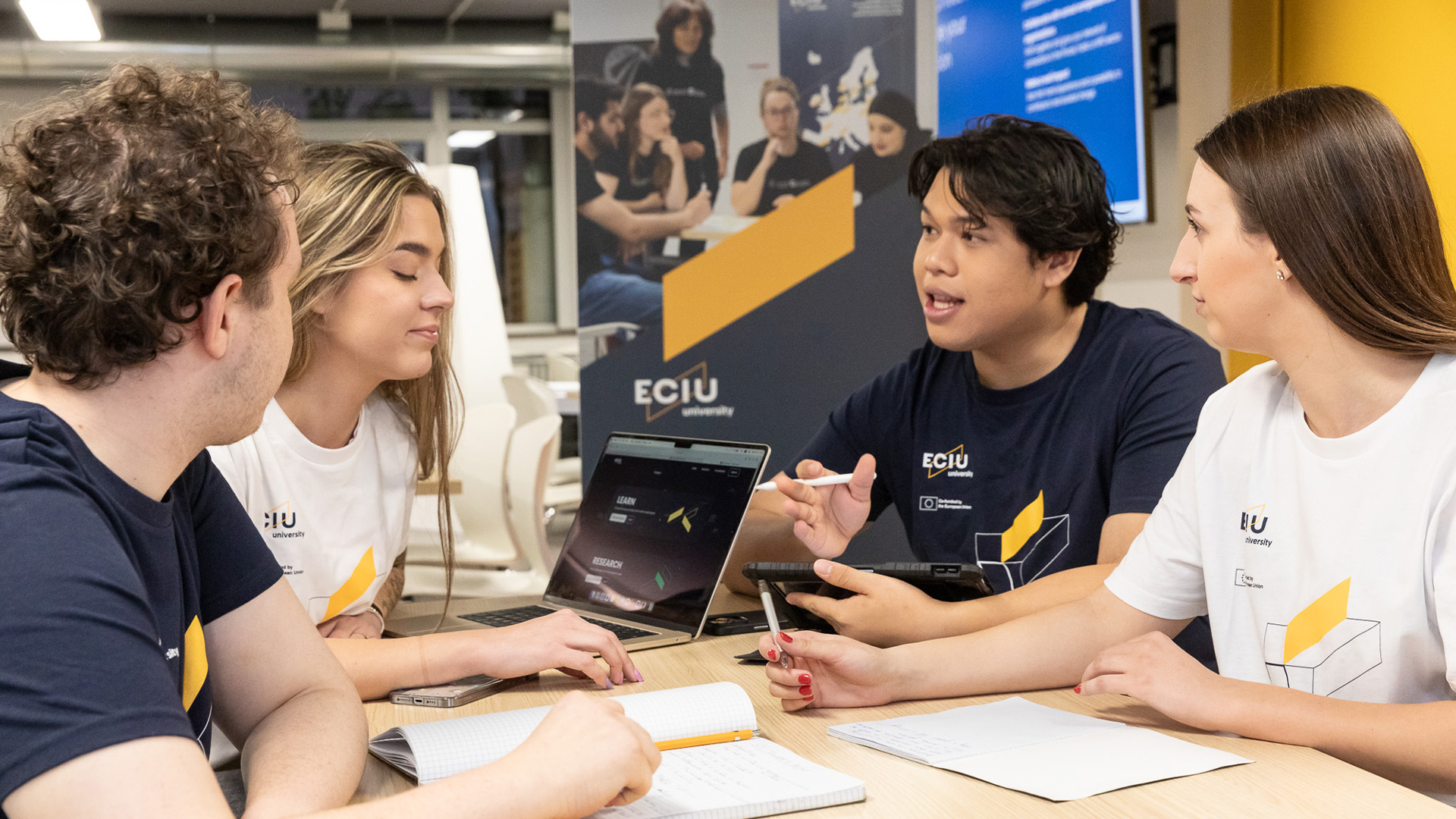
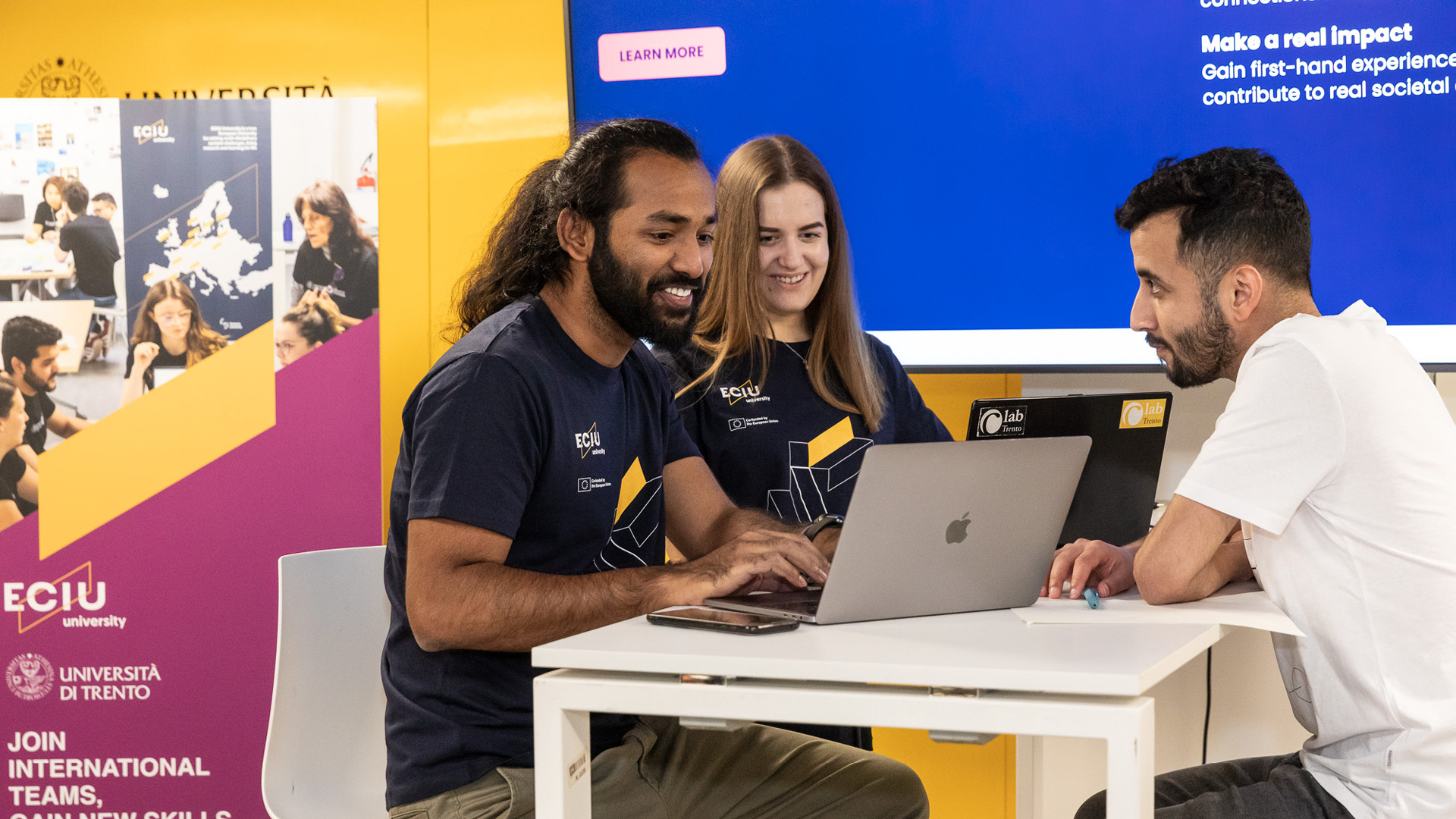
ECIU University connects students with businesses, academic staff, researchers, organisations and communities to tackle real-world challenges and contribute to meaningful change, while developing future-proof skills and laying the foundations for their careers.
ECIU University was one of the first alliances to join the European Universities initiative, a flagship initiative launched in 2019. Co-funded by the EU, the initiative now comprises 73 alliances involving almost 650 higher education institutions of all types from across Europe.
Pilot phase of the project (ECIUn, 2019–2022)
During the first years of ECIU University, the alliance piloted the challenge-based learning approach, in which multidisciplinary teams worked on real-world challenges and co-developed ideas and solutions.
The results achieved during ECIU University's first three years are available at ECIU/deliverables.
Second phase of the project (ECIUn+, 2022–2026)
The second phase of ECIU University focused on educational innovation through flexible, personalised learning pathways recognised through micro-credentials. The activities carried out during this phase led to five major transformative achievements (data as of March 2026):
- Innovative teaching and learning: ECIU University has transformed education through challenge-based learning and flexible learning pathways. More than 5,300 students have taken part in over 580 published learning opportunities (challenges or micro-modules). This has resulted in more than 9,300 participations recognised through the award of micro-credentials. Students have collaborated with over 180 external organisations, tackled real-world problems, developed transferable skills, learned new languages and strengthened their sense of European identity.
- Leadership in micro-credentials: ECIU University is at the forefront of micro-credentials in Europe. Policy development, combined with the technical implementation of micro-credentials integrated with the European Digital Credentials for Learning (EDCI) infrastructure, led to the issuance of more than 3,500 e-sealed micro-credentials in a single year.
- Digital experience platform: the digital ecosystem platform integrates 12 project partners and is central to many ECIU University processes, from teaching and learning delivery to administrative workflows and connecting participants through dedicated hubs.
- A vibrant community: a thriving ECIU University community brings together thousands of students from different countries through events, mobility programmes and collaborative learning experiences.
- A sustainable service framework: a robust service framework supports ECIU University's activities, ensuring high-quality support in teaching and learning, IT, mobility, marketing and communication.
Third phase (ECIUn+2, 2026–2028)
With EU co-funding secured, the Alliance is ready to continue developing its digital campus and promoting innovation in higher education to help build the European University of the future. Find out more on ECIU website.
SMART-ER
The ECIU University Research Institute for Smart European Regions (SMART-ER) is a project funded by the Horizon Europe programme. Developed within the ECIU network and coordinated by the University of Twente, SMART-ER aims to develop a new model for research and innovation, testing and validating new collaborative research models in a virtual scenario, and transformative and innovative approaches. The research topics of SMART-ER are developed along four main axes related to the UN SDG 11- Sustainable cities and communities: energy and sustainability, circular economy, transportation and mobility and communities resilient to change.
ESEU
The ESEU project, European Status for ECIU University, is funded by the European Commission and led by the University of Twente. ESEU aims to investigate the possibilities for the design of a European legal status to overcome obstacles in transnational collaboration of higher education institutions. It also aims to explore possible solutions to create a true European knowledge area.
BOOGIE-U
The ESEU project, European Status for ECIU University, is funded by the European Commission and led by the University of Twente. ESEU aims to investigate the possibilities for the design of a European legal status to overcome obstacles in transnational collaboration of higher education institutions. It also aims to explore possible solutions to create a true European knowledge area.
For further information, you can email to [email protected].